
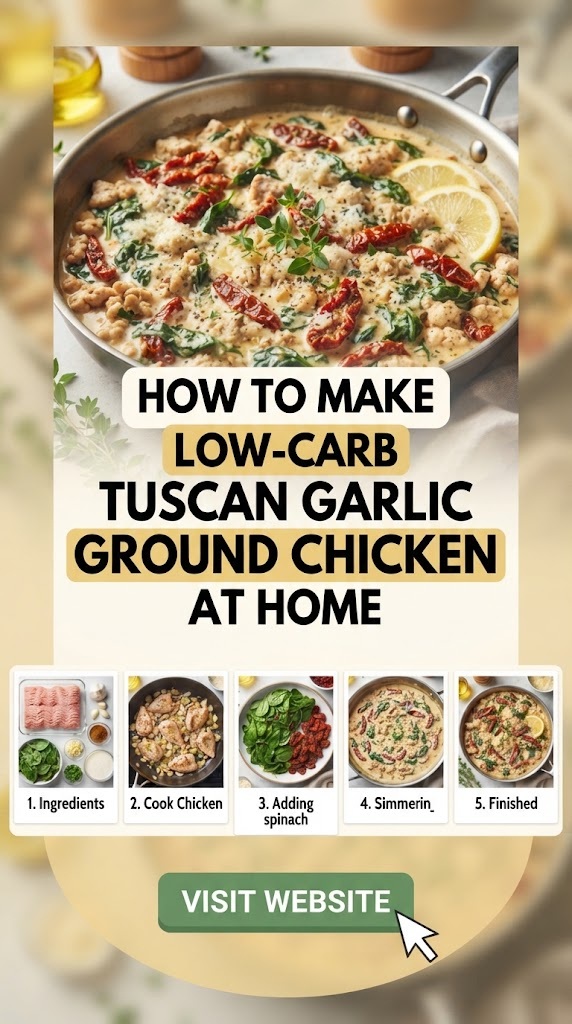
The culinary landscape of the Mediterranean has long been celebrated for its ability to combine simple, fresh ingredients into dishes that feel profoundly luxurious. Among these, the “Tuscan” style—characterized by a harmonious blend of garlic, sun-dried tomatoes, spinach, and cream—has taken the modern cooking world by storm. While traditionally paired with pasta or pan-seared chicken breasts, there is a new contender in the kitchen that offers better flavor absorption, faster cooking times, and a budget-friendly profile: Ground Chicken.
This comprehensive guide will walk you through the nuances of creating a Low-Carb Tuscan Garlic Ground Chicken that doesn’t just satisfy your hunger but transforms your kitchen into a high-end bistro. Whether you are following a strict ketogenic diet, looking to reduce your carbohydrate intake, or simply craving a 30-minute meal that tastes like it took three hours, this recipe is your new gold standard.
Why Ground Chicken is the Secret Hero of Tuscan Cooking
Most people reach for chicken breasts when they think of Italian-inspired poultry dishes. However, ground chicken offers several distinct advantages that make it superior for a creamy sauce-based dish like this one.
1. Superior Flavor Absorption
Ground chicken provides significantly more surface area than a whole breast or thigh. Every tiny morsel of meat becomes coated in the garlic-infused cream sauce, ensuring that every single bite is an explosion of flavor. You avoid the common pitfall of “dry center syndrome” often found in thick chicken breasts.
2. Efficiency and Speed
In a fast-paced world, ground chicken is a lifesaver. It browns in minutes and requires no slicing or dicing of raw meat on your cutting board, reducing the risk of cross-contamination and saving you precious prep time.
3. Lean Protein with Customizable Fat
Ground chicken is naturally lean, allowing you to control the healthy fats in your dish through the addition of high-quality olive oil, heavy cream, and Parmesan cheese. This makes it a perfect canvas for those tracking their macros.
The Anatomy of Tuscan Flavor: Ingredient Deep Dive
To master this dish, one must understand the role of each ingredient. We aren’t just tossing things into a pan; we are layering flavors to create depth and complexity.
The Aromatics: Garlic and Onion
Garlic is the heart of Tuscany. For this recipe, we recommend using fresh cloves rather than the pre-minced jars. The sulfurous compounds in fresh garlic provide a sharp, pungent bite that mellows into a buttery sweetness when sautéed. We also incorporate a small amount of finely diced shallot or yellow onion to provide a foundational sweetness that balances the saltiness of the cheese.
The Umami Boost: Sun-Dried Tomatoes
Sun-dried tomatoes are concentrated flavor bombs. They provide a tart, chewy contrast to the creamy sauce. When shopping, look for tomatoes packed in olive oil with herbs. The oil from the jar can even be used to brown the chicken for an extra layer of infused flavor.
The Greens: Fresh Baby Spinach
Spinach adds more than just a pop of vibrant color; it provides essential vitamins and minerals like iron and Vitamin K. In this dish, the spinach wilts into the sauce, absorbing the cream and garlic, making it one of the most delicious ways to eat your vegetables.
The Sauce: Heavy Cream and Aged Parmesan
For a low-carb profile, heavy cream is essential. It provides the luscious mouthfeel without the added sugars found in milk or the starches found in flour-based roux. When paired with freshly grated Parmesan Reggiano, the sauce thickens naturally through reduction and emulsification.
Essential Kitchen Tools for Success
Before you fire up the stove, ensure you have the right tools. A well-equipped kitchen makes the cooking process seamless.
- Large Cast Iron Skillet or Heavy-Bottomed Stainless Steel Pan: You want a pan that retains heat well to get a good sear on the chicken.
- Wooden Spoon or Stiff Spatula: Essential for breaking up the ground chicken into fine crumbles.
- Microplane or Fine Grater: For grating fresh Parmesan and mincing garlic into a paste if desired.
- Chef’s Knife: For precisely dicing the shallots and sun-dried tomatoes.
The Recipe: Low-Carb Tuscan Garlic Ground Chicken
Ingredients
The Meat:
- 1.5 lbs High-quality ground chicken (a mix of breast and thigh meat is best for moisture)
- 1 tbsp Extra virgin olive oil (or the oil from the sun-dried tomato jar)
- 1 tsp Sea salt
- 1/2 tsp Cracked black pepper
- 1 tsp Smoked paprika (for a subtle earthiness)
The Aromatics & Veggies:
- 4-6 Large cloves of garlic, minced
- 1 Small shallot, finely minced
- 1/2 cup Sun-dried tomatoes, drained and chopped
- 3 cups Fresh baby spinach (heaping)
The Creamy Base:
- 1 cup Heavy whipping cream
- 1/2 cup Chicken bone broth (adds depth and collagen)
- 3/4 cup Freshly grated Parmesan cheese
- 1 tsp Italian seasoning (dried oregano, basil, thyme, rosemary)
- 1/4 tsp Red pepper flakes (optional, for a hint of heat)
The Garnish:
- Fresh basil leaves, chiffonade
- Extra Parmesan cheese
- A squeeze of fresh lemon juice (to brighten the fats)
Step-by-Step Instructions
Phase 1: Searing the Chicken
Heat your skillet over medium-high heat and add the olive oil. Once the oil shimmers, add the ground chicken. Use your spatula to break the meat apart.
Pro Tip: Do not over-stir. Let the chicken sit undisturbed for 2-3 minutes to develop a golden-brown crust (the Maillard reaction). This crust is where the deep, savory flavor lives. Once browned, season with salt, pepper, and smoked paprika. Remove the chicken from the pan and set it aside on a plate, leaving the rendered fat in the skillet.
Phase 2: Building the Flavor Base
Lower the heat to medium. Add the minced shallots to the pan drippings. Sauté for 2 minutes until translucent. Add the minced garlic and red pepper flakes. Cook for only 30-60 seconds—garlic burns quickly and becomes bitter, so watch it closely.
Add the chopped sun-dried tomatoes and Italian seasoning. Stirring these into the hot oil allows the fat-soluble compounds in the herbs to “bloom,” intensifying their aroma.
Phase 3: Creating the Silky Sauce
Pour in the chicken bone broth to deglaze the pan. Use your wooden spoon to scrape up any brown bits (fond) stuck to the bottom. These bits are concentrated flavor.
Slowly pour in the heavy cream. Bring the mixture to a gentle simmer. Do not let it reach a rolling boil, as high heat can cause heavy cream to separate. Let the sauce simmer for 3-5 minutes until it begins to thicken slightly.
Phase 4: The Meltdown
Whisk in the grated Parmesan cheese. Stir continuously until the cheese is fully melted and the sauce is smooth and glossy. The proteins in the cheese will bond with the fats in the cream, creating a stable, thick emulsion.
Phase 5: The Final Assembly
Add the browned ground chicken back into the skillet, along with any juices that collected on the plate. Toss the chicken to coat it thoroughly in the sauce.
Add the fresh baby spinach in handfuls. It will look like a lot, but spinach reduces significantly in volume. Fold it into the warm sauce until it wilts and turns a deep emerald green.
Phase 6: The Finishing Touches
Remove the pan from the heat. Taste and adjust seasonings. A squeeze of fresh lemon juice at this stage acts as a “flavor elevator,” cutting through the richness of the cream and cheese. Garnish with fresh basil and an extra dusting of Parmesan.
Nutritional Science: Why This Dish Works for Low-Carb Diets
When following a low-carb or ketogenic lifestyle, the goal is to shift the body’s metabolism away from glucose and toward fat-burning (ketosis). This recipe is engineered to support that transition.
Macronutrient Profile
- High Protein: Ground chicken provides the amino acids necessary for muscle maintenance and satiety.
- Healthy Fats: The combination of olive oil and heavy cream provides long-lasting energy without the insulin spikes associated with carbohydrates.
- Low Net Carbs: By omitting pasta and flour thickeners, the carb count remains minimal. The primary carbs come from the spinach and garlic, which are fiber-rich and nutrient-dense.
The Role of Bioavailability
Cooking spinach actually increases the bioavailability of certain nutrients, such as beta-carotene and lutein. Furthermore, the fats in the cream sauce help your body absorb the fat-soluble vitamins (A, D, E, and K) found in the vegetables.
Customizing Your Tuscan Chicken: Variations and Substitutions
While the base recipe is spectacular, culinary creativity knows no bounds. Here are several ways to tweak the dish to suit your preferences:
1. The Dairy-Free Alternative
If you are avoiding dairy, replace the heavy cream with full-fat canned coconut milk. Swap the Parmesan for nutritional yeast to maintain that “cheesy” umami flavor. The result is a slightly sweeter, tropical-inflected Tuscan dish that is equally delicious.
2. The Vegetable Powerhouse
Want more volume? Add sautéed mushrooms, diced zucchini, or artichoke hearts. Mushrooms, in particular, complement the earthy garlic and cream perfectly.
3. The “Heat” Factor
If you enjoy spicy food, increase the red pepper flakes or add a teaspoon of Calabrian chili paste. The heat creates a beautiful contrast with the cooling cream.
4. Meat Substitutions
While ground chicken is the star here, this recipe works flawlessly with ground turkey or even ground pork. If using ground beef, use a lean blend (90/10) to prevent the sauce from becoming overly greasy.
What to Serve with Low-Carb Tuscan Chicken
Since we are keeping this low-carb, traditional pasta is off the table. However, there are several fantastic vehicles for this creamy sauce:
Zucchini Noodles (Zoodles)
The most popular low-carb choice. Sauté them briefly (no more than 2 minutes) or serve them raw—the heat from the chicken and sauce will soften them perfectly without making them watery.
Spaghetti Squash
Roast a spaghetti squash until the strands pull away easily. These “noodles” have a slight sweetness that pairs beautifully with the savory garlic sauce.
Cauliflower Mash or Rice
For a “comfort food” vibe, serve the Tuscan chicken over a bed of buttery cauliflower mash. The mash acts like a sponge, soaking up every drop of the garlic cream.
Hearts of Palm Pasta
A newer entry to the low-carb scene, hearts of palm pasta has a texture remarkably similar to al dente linguine and a very neutral flavor, making it an excellent keto-friendly base.
The Art of Meal Prepping and Storage
This dish is a meal prepper’s dream because it actually tastes better the next day as the flavors continue to marry in the refrigerator.
Refrigeration
Store leftovers in an airtight container for up to 4 days. When reheating, do so gently on the stovetop over low heat. Add a splash of water or chicken broth to loosen the sauce, as it will thicken significantly when cold.
Freezing
You can freeze this dish, but be aware that cream-based sauces can sometimes “break” or become grainy when thawed. To minimize this, thaw the dish completely in the fridge before reheating and whisk the sauce vigorously as it warms up to re-emulsify the fats.
Portions for Success
If you are tracking calories, portion the meal out immediately after cooking into glass containers. This prevents overeating and ensures you have high-quality lunches ready for the work week.
Troubleshooting Common Issues
“My sauce is too thin!”
If the sauce isn’t thickening to your liking, allow it to simmer for a few more minutes uncovered. Alternatively, add another handful of Parmesan cheese. The cheese acts as a natural binding agent.
“My sauce separated/oiled out!”
This usually happens if the heat was too high. To fix a broken sauce, remove it from the heat and whisk in a tablespoon of cold heavy cream or a teaspoon of warm water. This can often bring the emulsion back together.
“The chicken is dry.”
This is rare with ground chicken in a cream sauce, but it can happen if the meat was overcooked during the initial searing phase. Next time, remove the chicken as soon as it’s no longer pink; it will finish cooking through when you add it back into the simmering sauce.
The History and Evolution of “Tuscan” Cream Sauce
To truly appreciate this meal, it helps to understand its origins. While the “Tuscan Garlic Chicken” we know today is largely an Italian-American creation (popularized by restaurants like Olive Garden), its roots lie in the traditional flavors of Central Italy.
Tuscany is known for Cucina Povera or “poor cooking”—the art of making magnificent meals from humble ingredients. Real Tuscan cooking focuses on high-quality olive oil, beans, greens, and aromatics. The addition of heavy cream is a departure from traditional regional cooking, which rarely uses heavy dairy in savory entrees. However, the combination of sun-dried tomatoes and garlic is a direct nod to the sun-drenched agricultural heritage of the region.
By using ground chicken, we are honoring the spirit of Cucina Povera by taking an affordable, accessible protein and elevating it to the level of fine dining through technique and seasoning.
Frequently Asked Questions
Can I use frozen spinach? Yes, but ensure you thaw it and squeeze out every drop of excess moisture. Frozen spinach contains a surprising amount of water, which will turn your creamy sauce into a watery soup if not properly drained.
Is this dish spicy? As written, it has a very mild warmth from the red pepper flakes. If you are sensitive to heat, feel free to omit them entirely.
How can I make this even lower in calories? To reduce calories while keeping it low-carb, you can swap half of the heavy cream for unsweetened almond milk and increase the amount of chicken broth. Note that the sauce will be thinner and less “velvety.”
Can I add wine to the sauce? Absolutely. A splash of dry white wine (like Pinot Grigio or Sauvignon Blanc) used to deglaze the pan before adding the broth adds a sophisticated acidity that balances the cream.
Conclusion: A New Weeknight Staple
The Low-Carb Tuscan Garlic Ground Chicken is more than just a recipe; it’s a testament to the fact that healthy eating doesn’t have to be boring or restrictive. By focusing on high-impact ingredients like fresh garlic, sun-dried tomatoes, and aged Parmesan, you create a meal that rivals any high-carb pasta dish in terms of satisfaction and flavor.
This dish proves that with a single skillet and thirty minutes, you can produce a gourmet experience that supports your health goals. It is versatile, elegant, and undeniably delicious. Whether you’re serving a family or prepping for yourself, this recipe is a powerful tool in your culinary arsenal.
Put on some Italian jazz, pour a glass of keto-friendly dry wine, and enjoy the process of creating a masterpiece. Your journey to mastering low-carb Mediterranean flavors starts in this skillet.