

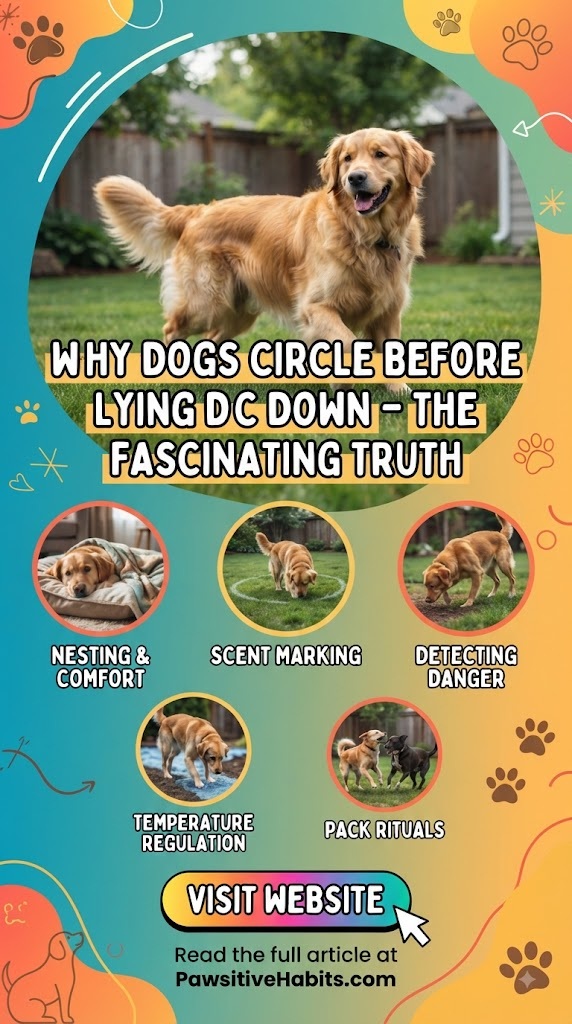
Why Dogs Circle Before Lying Down: The Fascinating Science Behind Your Pup’s Bedtime Ritual
Have you ever watched your furry friend prepare for a nap? It is a performance that rivals a choreographed ballet. Your dog approaches their bed, or perhaps a patch of rug, and begins a series of rhythmic, tight circles. Sometimes it’s two turns; sometimes it’s ten. They might throw in a few frantic scratches at the blankets for good measure before finally collapsing into a heap of fur and contented sighs.
To us, it looks like a quirky, slightly neurotic habit. But to a dog, this ritual—often called “denning behavior”—is a deeply ingrained survival mechanism that has been passed down through thousands of generations. While your Golden Retriever is safe in a climate-controlled living room, their brain is still running software designed for the Great Plains and the dense forests of the Pleistocene.
In this comprehensive exploration, we will dive into the evolutionary, biological, and psychological reasons why dogs circle before lying down. We will also look at when this behavior transitions from “cute quirk” to a potential medical concern.
1. The Evolutionary Blueprint: The “Wild Ancestor” Theory
The most widely accepted explanation for circling is rooted in evolution. Long before dogs were pampered pets with Instagram accounts, they were wild canids—ancestors of the modern wolf (Canis lupus). These animals didn’t have the luxury of memory foam mattresses or orthopedic bolsters. They slept in the wild, where the environment was often unforgiving.
Flattening the Terrain
In the wild, the ground is rarely flat or soft. It is covered in tall grass, prickly brush, twigs, and stones. By walking in a circle, a wild dog would effectively “tread down” the vegetation. This created a level, padded surface. Think of it as the original “making the bed.” By flattening the grass, they also forced out any hidden thorns or jagged sticks that could injure them during the night.
Evicting Unwanted Roommates
The wild is home to more than just large predators; it is teeming with smaller nuisances like snakes, spiders, scorpions, and biting insects. Circling and scratching the ground serves as a mechanical “eviction notice.” The vibration and movement of the dog’s paws disturb any critters nesting in the grass, giving them a chance to scurry away before the dog lies down on top of them.
2. The Survival Instinct: Safety and Security
Survival in the wild depends on more than just comfort; it depends on tactical positioning. The circling ritual allowed ancestral dogs to assess their environment one last time before entering a vulnerable state of sleep.
The “Lookout” Mechanism
By turning 360 degrees, a dog gets a final panoramic view of their surroundings. This allows them to spot any approaching predators or threats from any angle. Even though your Poodle’s biggest “predator” might be the vacuum cleaner, the instinct to survey the perimeter remains.
Wind Direction and Scent
Wolves and wild dogs are masters of scent. By circling, they can determine the direction of the wind. In the wild, dogs typically prefer to sleep with their noses pointed toward the wind. This allows them to catch the scent of an intruder or a predator before it gets too close. This “early warning system” was a vital component of canine survival for millennia.
Group Cohesion
In a pack setting, circling also helps establish the “boundaries” of the sleeping area. By circling, pack members ensure they are close enough to their companions for warmth and protection, but not so close that they are encroaching on another dog’s space, which could lead to a territorial skirmish.
3. Temperature Regulation: The Biological Thermostat
Dogs are remarkably adaptable to different climates, and their bedtime ritual plays a significant role in managing body temperature.
Staying Warm in the Cold
In cold environments, circling and “nesting” help a dog conserve heat. By treading down a circular area and then curling into a tight ball (often with their nose tucked under their tail), dogs minimize their surface area. This reduces the amount of heat lost to the environment. The “nest” created by circling acts as a barrier against the cold ground.
Staying Cool in the Heat
Conversely, in hot climates, dogs might circle and scratch at the earth to uncover the cooler soil beneath the surface. While a modern dog might do this to your expensive Persian rug, the instinct is to find a heat sink—a place where the earth is damp and cool to help lower their core temperature.
4. Scent Marking and Territory: The Chemical “No Trespassing” Sign
Dogs experience the world primarily through their noses. They have scent glands located in various parts of their bodies, including their paw pads.
The Power of the Paws
When a dog circles and scratches at their bed, they are doing more than just moving blankets. They are depositing their unique scent onto the sleeping area. This is a form of territorial marking. To another dog, that scent says, “This spot is occupied.”
Creating a Sense of Home
Even in a single-dog household, this scent-marking behavior provides a sense of psychological comfort. The familiar smell of their own pheromones helps the dog feel secure and relaxed, signaling to their brain that they are in a “safe zone” where they can let their guard down.
5. The Anatomy of Comfort: Finding the “Sweet Spot”
Have you ever tossed and turned for twenty minutes trying to find the perfect position for your pillow? Dogs do the same thing.
Spinal Alignment
Circling helps a dog find their center of gravity and align their spine. Depending on the dog’s age, weight, and joint health, they may need to turn several times to ensure that when they finally drop, their body is supported in a way that doesn’t put pressure on their hips or shoulders.
The “Trampoline” Effect
In the wild, certain grasses have a springy quality. By circling, a dog can test the “give” of the ground. This ensures they aren’t about to lie down on a rock or a hidden hole that could cause discomfort. In the modern home, this translates to the dog testing the fluffiness of their bed or the cushion of the sofa.
6. When Circling Becomes a Concern: Medical and Behavioral Red Flags
While circling is a natural and healthy behavior, there are instances where it can indicate an underlying problem. As a pet owner, it is important to distinguish between a “bedtime ritual” and a “symptom.”
Canine Compulsive Disorder (CCD)
Just like humans can suffer from OCD, dogs can develop Canine Compulsive Disorder. If your dog circles excessively—not just before lying down, but throughout the day—or if they seem unable to stop even when distracted, it may be a sign of anxiety or a neurological issue.
Arthritis and Joint Pain
If an older dog starts circling significantly more than they used to, or if they circle but seem hesitant or pained when trying to actually sit or lie down, they may be suffering from osteoarthritis or hip dysplasia. The extra circling is an attempt to find a position that doesn’t hurt, but the physical act of lying down becomes a struggle.
Cognitive Dysfunction (Doggy Dementia)
In senior dogs, excessive or aimless circling can be a symptom of Canine Cognitive Dysfunction (CCD). If your dog seems “stuck” in a circling loop, appears disoriented, or wanders into corners and gets stuck, it is time for a veterinary consultation.
Neurological Issues and Vestibular Disease
If the circling is accompanied by a head tilt, loss of balance, or flicking eye movements (nystagmus), it could indicate an issue with the inner ear or the brain. Vestibular disease, often called “old dog syndrome,” can cause a dog to walk in circles because their sense of equilibrium is shattered.
7. The Scratching Factor: Why the Digging?
Along with circling, many dogs engage in frantic “digging” at their beds. This is often referred to as “denning.”
The Burrowing Instinct
Many breeds, particularly Terriers and Dachshunds, were bred to go into tunnels and burrows. For these dogs, the urge to “dig” a nest is even more pronounced. They aren’t trying to destroy your blankets; they are trying to create a protected “pocket” to sleep in.
Creating “Bolsters”
By scratching at their bedding, dogs move the fabric around to create raised edges or “pillows.” This provides a headrest and creates a sense of being enclosed, which triggers the release of oxytocin (the “cuddle hormone”) and helps the dog feel protected from all sides.
8. Breed-Specific Variations
Does every dog circle? Not necessarily. While the instinct exists in the species, certain breeds and individual personalities display it more prominently than others.
- Sight Hounds (Greyhounds, Whippets): These dogs are built for speed and have very little body fat. They are often more meticulous about their “nesting” because they are highly sensitive to hard surfaces and cold temperatures.
- Northern Breeds (Huskies, Malamutes): These dogs are the masters of the “snow nest.” Their circling and digging are often more intense as they are genetically programmed to create a hollow in the snow to shield themselves from Arctic winds.
- Working Breeds (German Shepherds, Labradors): Because these dogs are often more “on alert,” their circling might be more focused on the “perimeter check” aspect of the ritual.
9. How to Support Your Dog’s Bedtime Ritual
Since circling is a natural behavior, you shouldn’t try to stop it. Instead, you can provide an environment that honors their instincts.
Choosing the Right Bed
- Donut Beds: If your dog loves to circle and curl up, a round “donut” bed with raised edges provides the perfect “nest” shape, reducing the need for them to “create” the shape themselves.
- Dig-Proof Bedding: For dogs that scratch aggressively, look for beds made from heavy-duty ballistic nylon or provide them with old towels and blankets they are allowed to “rearrange.”
- Temperature-Regulating Materials: If your dog circles excessively due to heat or cold, consider a cooling gel mat for summer or a self-warming bed for winter.
Respect the Space
When a dog is in the middle of their circling ritual, it is best to let them finish. Interrupting them can cause a minor spike in cortisol (stress) because they haven’t “completed” their safety check. Think of it like someone turning off the lights while you are still trying to find your way to bed.
10. Fun Facts About Canine Sleep
To truly understand why dogs circle, we must understand how they sleep.
- The “Vulnerability” of the Belly: When a dog circles and then flops onto their back (the “dead cockroach” position), it is a sign of ultimate trust. They have finished their safety check and determined that there are zero threats, allowing them to expose their most vulnerable organs.
- Dreaming: Dogs enter REM (Rapid Eye Movement) sleep just like we do. If they’ve done their circles and settled in, you might see their paws twitching—they’re likely “circling” or running in their dreams!
- The Nose Tucked Under the Tail: This is the “final step” of the circle. By tucking their nose under their tail, they filter the air they breathe through their fur, warming it up before it hits their lungs.
Conclusion: A Window Into the Ancient Past
The next time you see your dog spinning in circles on your living room rug, take a moment to appreciate the incredible journey that brought them there. That simple 360-degree turn is a bridge between the modern world and the wild, untamed wilderness of their ancestors. It is a testament to the power of evolution and the enduring instincts that make dogs the fascinating, complex companions we love.
Whether they are clearing away imaginary snakes, checking the wind for wolves, or simply fluffing a pillow, the “doggy circle” is a beautiful reminder that while we have changed their world, their core essence remains beautifully, authentically canine. So, let them spin, let them scratch, and when they finally settle down, know that they are sleeping soundly because they’ve followed a ritual that has kept their kind safe for millions of years.