
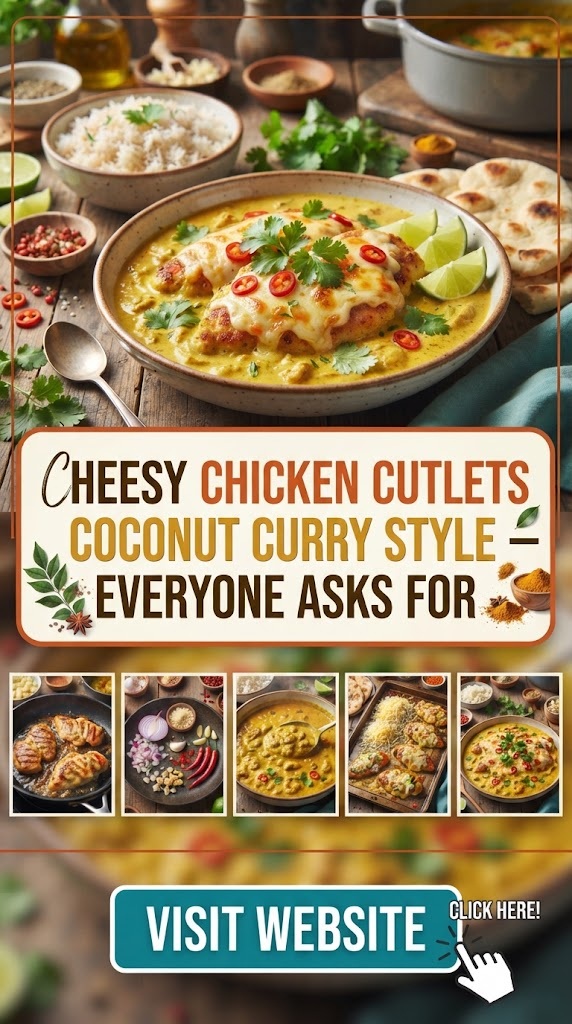
In the vast landscape of culinary experiments, few things are as universally beloved as a perfectly fried chicken cutlet. Whether it’s an Italian Cotoletta, a Japanese Tonkatsu, or a classic American breaded breast, the combination of a golden, crunchy exterior and juicy interior is a staple of comfort. But what happens when you take that classic foundation and marry it with the rich, aromatic, and velvety textures of a Southeast Asian-inspired coconut curry?
The result is Cheesy Chicken Cutlets Coconut Curry Style. It is a dish so decadent, so flavorful, and so visually striking that it has become the “request of a lifetime” in households across the country. It is a fusion masterpiece that bridges the gap between the crispiness of a pub favorite and the exotic depth of a traditional curry.
This guide will take you through every nuance of this recipe—from the science of the perfect breading to the balancing of the aromatic coconut sauce—ensuring that the next time you host a dinner, you’ll be the one being asked, “How did you make this?”
The Philosophy of the Fusion: Why This Dish Works
At first glance, cheese, fried chicken, and coconut curry might seem like an unlikely trio. However, culinary science tells a different story. This dish succeeds because it masters the three pillars of taste: Contrast, Fat, and Umami.
- Texture Contrast: The crunch of the breaded chicken provides a necessary counterpoint to the silky, liquid nature of the curry sauce.
- Fat as a Flavor Carrier: Both cheese and coconut milk are high in fat. Fat is the primary vehicle for flavor, especially for spices like turmeric, cumin, and ginger found in curry.
- The Umami Bomb: The combination of chicken protein, melted cheese (especially if using Parmesan or Mozzarella), and the fermented notes often found in curry pastes creates a savory depth that lingers on the palate.
When you take a bite, you experience the initial “shatter” of the crust, followed by the gooey pull of the cheese, all finished with the warming, spiced hug of the coconut milk.
The Master Ingredient List
To create a dish that “everyone asks for,” you cannot cut corners with ingredients. Quality is paramount.
For the Chicken Cutlets:
- Chicken Breasts: 4 large breasts, sliced into thin cutlets and pounded to an even thickness.
- Flour: All-purpose flour for the initial dredge.
- Eggs: 3 large eggs, beaten with a splash of water or heavy cream.
- Panko Breadcrumbs: These provide a superior crunch compared to traditional breadcrumbs.
- Parmesan Cheese: Finely grated, to be mixed into the breading.
- Mozzarella or Provolone: Thin slices to melt on top of the chicken.
- Seasonings: Salt, black pepper, garlic powder, and onion powder.
For the Coconut Curry Sauce:
- Coconut Milk: 2 cans (13.5 oz each) of full-fat coconut milk. Do not use “lite” coconut milk; you need the fat for the emulsion.
- Curry Paste: 2-3 tablespoons of Red or Yellow Thai Curry Paste (depending on your heat preference).
- Aromatics: 1 large shallot (minced), 4 cloves of garlic (grated), and 1 tablespoon of fresh ginger (grated).
- Acid: Juice of 1 lime.
- Sweetener: 1 tablespoon of brown sugar or palm sugar to balance the heat.
- Fish Sauce or Soy Sauce: 1 tablespoon for that essential salty, savory backbone.
- Fresh Herbs: Cilantro and Thai basil for garnishing.
Step 1: Preparing the Chicken – The Foundation of Flavor
The secret to a great cutlet isn’t just the frying; it’s the preparation. If your chicken is uneven in thickness, one side will be dry while the other remains raw.
The Art of the Pound
Place your chicken cutlets between two sheets of plastic wrap or in a heavy-duty gallon bag. Using a meat mallet (the flat side), gently pound the chicken from the center outward. Your goal is a uniform thickness of about 1/4 to 1/2 inch. This ensures that the chicken cooks quickly and evenly, preventing the breading from burning before the meat is done.
The Seasoning Layer
Most people only season their flour. For a professional-level dish, you must season the meat itself. Lightly salt and pepper the naked chicken cutlets before they ever touch the flour. This builds layers of flavor.
Step 2: The Three-Stage Dredging Station
To achieve a crust that doesn’t fall off in the pan, you must follow the three-stage process:
- Flour: The flour dries the surface of the meat, allowing the egg to stick. Add a pinch of garlic powder to the flour for an extra kick.
- Egg Wash: The glue. Make sure the chicken is fully submerged and any excess is dripped off.
- The Panko-Parmesan Mix: This is the game-changer. Mix your Panko with a generous amount of finely grated Parmesan. The cheese in the breading caramelizes in the hot oil, creating a nutty, salty crust that is far superior to breadcrumbs alone.
Pro-Tip: Press the chicken firmly into the Panko mixture. You want those crumbs to be embedded in the meat.
Step 3: Frying to Golden Perfection
You don’t need a deep fryer, but you do need the right pan. A heavy-bottomed cast-iron skillet or a stainless steel pan is ideal for heat retention.
- The Oil: Use an oil with a high smoke point, such as avocado, grapeseed, or vegetable oil. Do not use extra virgin olive oil for frying the cutlets as it will smoke and become bitter.
- The Temperature: The oil should be around 350°F (175°C). If you don’t have a thermometer, drop a single breadcrumb into the oil; if it sizzles immediately, you’re ready.
- The Fry: Fry the cutlets for about 3-4 minutes per side. You are looking for a deep, golden mahogany color.
- The Cheese Melt: Once you flip the chicken and it’s almost done, place a slice of Mozzarella on top. Cover the pan with a lid for the final 60 seconds of cooking. The steam will melt the cheese into a gooey blanket over the crispy crust.
Step 4: Crafting the Signature Coconut Curry Sauce
While the chicken is resting, it’s time to build the sauce that gives this dish its name. This isn’t just a side sauce; it’s the soul of the meal.
- Sauté the Aromatics: In a clean saucepan, heat a teaspoon of oil. Add the minced shallots, garlic, and ginger. Cook until fragrant but not browned (about 2 minutes).
- Bloom the Curry Paste: Push the aromatics to the side and add the curry paste to the center. Fry the paste for 1 minute. This “blooming” process releases the essential oils in the spices, making the flavor much more vibrant.
- Deglaze with Coconut Milk: Pour in the coconut milk slowly, whisking as you go to incorporate the paste.
- Simmer and Season: Add the brown sugar, fish sauce, and lime juice. Let the sauce simmer for 5-7 minutes. It should thicken slightly to a consistency that can coat the back of a spoon.
- The Taste Test: Curry is all about balance. If it’s too spicy, add more coconut milk or sugar. If it’s too flat, add another squeeze of lime or a dash of fish sauce.
Step 5: Assembly and Presentation
To maintain the “Everyone Asks For” status, presentation is key. You don’t want to drown the chicken, or you’ll lose that hard-earned crunch.
- The Base: Start with a bed of fluffy jasmine rice or coconut-infused rice.
- The Sauce Pool: Ladle a generous amount of the coconut curry sauce onto the plate, forming a vibrant orange/yellow pool.
- The Star: Place the cheesy chicken cutlet directly on top of the sauce. This keeps the top of the chicken crispy while the bottom begins to soak up the curry flavors.
- The Garnish: Sprinkle with fresh cilantro, sliced red chilies (for heat), and a final squeeze of lime. The green of the herbs against the golden chicken and the creamy sauce is visually stunning.
Why “Everyone Asks For” This Dish: The Flavor Profile
When people eat this, they experience a sequence of sensations. First, there is the familiar comfort of the breaded chicken—reminiscent of home cooking. Then comes the surprise of the melted cheese, which adds a creamy, salty richness. Finally, the coconut curry introduces a complex, aromatic heat that elevates the entire experience from “dinner” to “culinary event.”
It hits every flavor note:
- Salty: From the Parmesan and fish sauce.
- Sweet: From the coconut milk and sugar.
- Sour: From the lime juice.
- Bitter/Spicy: From the ginger and curry spices.
- Umami: From the chicken and cheese.
Expert Tips for Success
Even for an expert cook, these small details make a massive difference:
1. The “Dry Hand, Wet Hand” Rule
When breading, use one hand for the dry ingredients (flour and Panko) and the other for the wet ingredients (egg). This prevents your fingers from becoming “club hands” covered in thick batter, and it keeps your workspace much cleaner.
2. Don’t Crowd the Pan
If you put too many cutlets in the pan at once, the temperature of the oil will drop. Instead of frying, the chicken will steam, resulting in a soggy, oily crust. Fry in batches if necessary.
3. Let the Meat Rest
Let the chicken rest for 3-5 minutes on a wire rack after frying. If you put it directly onto a flat plate, the steam escaping from the meat will soften the bottom crust. A wire rack allows for air circulation.
4. Use Full-Fat Coconut Milk
This cannot be stressed enough. “Lite” coconut milk is mostly water and will result in a thin, watery sauce that lacks the luxurious mouthfeel required for this dish.
Variations to Try
While the base recipe is perfect, you can adapt this dish to suit different dietary needs or flavor preferences:
The Keto/Low-Carb Version
- The Breading: Replace Panko with crushed pork rinds or almond flour mixed with extra Parmesan.
- The Base: Serve over cauliflower rice or sautéed bok choy instead of jasmine rice.
- The Sweetener: Use a keto-friendly sweetener like monk fruit in the sauce.
The “Extra Spicy” Thai Twist
- Use Green Curry Paste instead of Red or Yellow. Green curry is typically hotter and has a more herbaceous profile with hints of lemongrass and kaffir lime.
- Add sliced bird’s eye chilies to the sauce as it simmers.
The Mediterranean Fusion
- Swap the coconut milk for a mixture of heavy cream and a splash of white wine.
- Replace the curry paste with sun-dried tomato pesto and dried oregano.
- Keep the cheese, but use Fontina or Provolone for a different melt profile.
Side Dish Pairings
To round out the meal, consider these sides:
- Charred Broccolini: The bitterness of charred greens cuts through the richness of the coconut milk.
- Pickled Red Onions: The acidity and bright pink color provide a visual and flavorful pop.
- Garlic Naan: Perfect for scooping up every last drop of the curry sauce.
- Cucumber Salad: A cold, crisp salad with a vinegar dressing acts as a palate cleanser between bites of the rich chicken.
Troubleshooting Common Issues
“My breading is falling off.”
This usually happens if the chicken was too wet before the flour stage, or if you didn’t press the Panko firmly enough. Ensure the chicken is patted dry with paper towels before starting the process.
“The sauce is too thin.”
Let it simmer longer. As the water evaporates, the sauce will thicken. Alternatively, you can mix 1 teaspoon of cornstarch with a tablespoon of water and whisk it into the simmering sauce.
“The cheese isn’t melting properly.”
If you’re using pre-shredded cheese from a bag, it is often coated in potato starch to prevent clumping. This starch inhibits melting. For the best results, use fresh Mozzarella or a block that you grate or slice yourself.
Storage and Reheating
If you have leftovers (which is rare!), storage is key to maintaining quality.
- Storage: Store the chicken and the sauce in separate airtight containers in the refrigerator for up to 3 days.
- Reheating the Chicken: Do not use the microwave; it will make the breading soggy. Instead, place the cutlets in an air fryer at 350°F for 3-5 minutes, or in a toaster oven. This will bring back the crunch.
- Reheating the Sauce: Warm the sauce in a small saucepan over low heat. If it has thickened too much in the fridge, add a splash of water or more coconut milk to loosen it up.
The Cultural Impact of Fusion Cooking
The Cheesy Chicken Cutlet Coconut Curry represents a larger trend in modern cooking: the breaking of borders. In the past, culinary traditions were strictly guarded. Today, we understand that the techniques of the West (like the perfect pan-fry) and the flavors of the East (like the complexity of curry) are not mutually exclusive.
This dish is a conversation starter. It challenges the eater’s expectations and provides a sense of discovery. When you serve this, you aren’t just serving a meal; you’re serving a story of how different cultures can blend together to create something better than the sum of its parts.
Final Thoughts: The Recipe That Changes Everything
There is a reason why “Everyone Asks For” this recipe. It feels like a luxury meal from a high-end fusion bistro, yet it is made with accessible ingredients and straightforward techniques. It satisfies the craving for fried food while offering the nutritional benefits of ginger, turmeric, and garlic.
Whether you are cooking for a picky family, trying to impress a date, or hosting a dinner party for seasoned foodies, this Cheesy Chicken Cutlets Coconut Curry Style recipe is your secret weapon. It is bold, it is beautiful, and above all, it is incredibly delicious.
Once you master the balance of the crispy, cheesy chicken and the aromatic coconut sauce, you’ll find yourself coming back to this recipe again and again. It isn’t just a meal; it’s a new favorite tradition.
Frequently Asked Questions (FAQ)
Can I use chicken thighs instead of breasts? Absolutely. Chicken thighs are more forgiving and stay juicier due to their higher fat content. Just ensure they are pounded to an even thickness so they cook at the same rate.
Is this dish very spicy? It depends on the curry paste you use. Red curry paste has a moderate kick, while yellow is generally milder. If you are sensitive to heat, start with one tablespoon of paste and add more to taste.
Can I make the sauce ahead of time? Yes! The sauce actually develops more flavor if made a day in advance. Simply store it in the fridge and reheat gently when you are ready to fry the chicken.
What kind of cheese works best? Mozzarella is the king of the “cheese pull,” but if you want more flavor, a mixture of Mozzarella and sharp White Cheddar or Gruyère can add a sophisticated depth to the dish.
How do I make the rice more flavorful? Instead of boiling your rice in plain water, use a 50/50 mix of water and coconut milk, and add a bruised stalk of lemongrass or a couple of cardamom pods to the pot. It will complement the curry perfectly.