
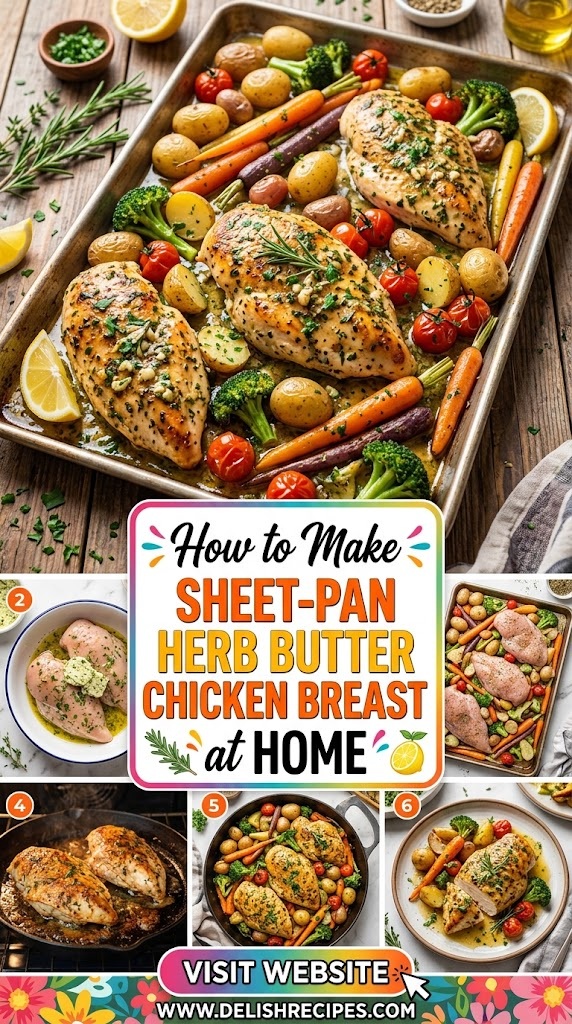
In the fast-paced world of modern living, the “weeknight dinner dilemma” is a universal struggle. We crave the comfort of a home-cooked meal, the nutritional value of fresh ingredients, and the complex flavors of a gourmet restaurant, yet we are often hindered by the daunting prospect of a mountain of dishes and hours spent over a hot stove. Enter the sheet-pan revolution. Specifically, the Sheet-Pan Herb Butter Chicken Breast—a culinary masterpiece that marries simplicity with sophistication.
This dish is not merely a recipe; it is a technique. By mastering the balance of aromatic herbs, rich fats, and high-heat roasting, you can transform the humble, often-maligned chicken breast into a succulent, golden-brown centerpiece. This comprehensive guide will walk you through every nuance of creating this dish at home, ensuring that your chicken is never dry and your vegetables are always perfectly charred.
Why the Sheet-Pan Method is a Culinary Game-Changer
Before we dive into the ingredients, it is essential to understand why the sheet-pan method has taken the culinary world by storm.
- Efficiency and Speed: By cooking your protein and vegetables on a single surface, you maximize heat distribution and minimize transition time.
- Flavor Fusion: As the chicken roasts, its juices mingle with the herb butter and the surrounding vegetables. This creates a self-basting environment where every component of the meal seasons the other.
- The Maillard Reaction: The wide surface area of a sheet pan allows for better airflow than a high-sided roasting pan. This promotes the Maillard reaction—the chemical reaction between amino acids and reducing sugars that gives browned food its distinctive flavor.
- Minimal Cleanup: One pan. One cutting board. One bowl for the butter. That is all that stands between you and a clean kitchen.
The Anatomy of the Perfect Herb Butter
The heart of this dish lies in the compound butter. While many recipes call for a simple drizzle of olive oil, the use of herb butter elevates the chicken breast from “healthy” to “heavenly.”
Choosing Your Fat
For the best results, use high-quality, unsalted European-style butter. These butters typically have a higher butterfat content and lower water content, which leads to a crispier skin (if using skin-on) and a richer mouthfeel. If you are dairy-free, a high-quality vegan butter or even clarified butter (ghee) can be used, though the flavor profile will shift slightly.
The Herb Profile
While you can use dried herbs in a pinch, fresh herbs are non-negotiable for the “hero” version of this dish.
- Rosemary: Provides a woody, pine-like aroma that stands up well to high heat.
- Thyme: Offers a subtle, earthy sweetness.
- Sage: Adds a peppery, savory depth.
- Parsley: Brightens the dish and cuts through the richness of the butter.
The Aromatics
Garlic is a mandatory addition. However, instead of just mincing it, try mashing it into a paste with a pinch of coarse salt. This ensures the garlic flavor is distributed evenly throughout the butter and prevents large chunks of garlic from burning in the oven.
Ingredients You Will Need
To create a meal that serves four people, gather the following:
The Chicken
- 4 large boneless, skinless chicken breasts (approximately 6–8 ounces each).
- Note: Try to find “air-chilled” chicken. It hasn’t been soaked in water during processing, meaning it will sear better and won’t release excess moisture into the pan.
The Herb Butter
- 1/2 cup (1 stick) unsalted butter, softened to room temperature.
- 3 cloves garlic, minced or pressed.
- 1 tablespoon fresh rosemary, finely chopped.
- 1 tablespoon fresh thyme leaves.
- 1 tablespoon fresh parsley, chopped.
- 1 teaspoon lemon zest (crucial for acidity).
- 1/2 teaspoon smoked paprika (for color and a hint of warmth).
- Salt and freshly cracked black pepper to taste.
The Vegetable Base
- 1 lb baby Yukon Gold potatoes, halved (their creamy texture is the perfect foil for chicken).
- 1 bunch of thick asparagus, ends trimmed.
- 1 red bell pepper, sliced into thick strips.
- 2 tablespoons olive oil (to toss the veggies).
Step-by-Step Preparation Guide
1. Preheating and Pan Prep
Preheat your oven to 425°F (220°C). High heat is essential for roasting. If the oven is too cool, the chicken will steam rather than roast, leading to a rubbery texture. Line a large, heavy-duty rimmed baking sheet with parchment paper or aluminum foil for the easiest cleanup.
2. Preparing the Chicken
Chicken breasts are uneven—they are thick at one end and thin at the other. To ensure even cooking, place the chicken between two sheets of plastic wrap and lightly pound the thicker part with a meat mallet or a heavy rolling pin until the breast is of uniform thickness (about 1 inch).
Pat the chicken dry with paper towels. Moisture is the enemy of browning. If the surface is wet, the heat of the oven will go into evaporating that water rather than searing the meat.
3. Mixing the Compound Butter
In a small bowl, combine the softened butter, garlic, rosemary, thyme, parsley, lemon zest, paprika, salt, and pepper. Use a fork to mash everything together until the herbs are thoroughly suspended in the butter.
4. Seasoning the Vegetables
Place the potatoes in a bowl, toss with olive oil, salt, and pepper. Spread them onto the prepared sheet pan. Since potatoes take longer to cook than chicken and asparagus, we will give them a head start. Roast the potatoes alone for 12–15 minutes.
5. Assembling the Pan
Remove the pan from the oven. Move the partially cooked potatoes to the sides. Place the chicken breasts in the center of the pan. Arrange the asparagus and bell peppers in the remaining open spaces.
Take about two-thirds of your herb butter and spread it generously over each chicken breast. Use the remaining third to dot the vegetables. The butter will melt and create a delicious sauce at the bottom of the pan.
6. The Roasting Process
Slide the pan back into the oven. Roast for 18–22 minutes. The exact time will depend on the thickness of your chicken.
7. The Golden Rule: Temperature Control
The most common mistake in cooking chicken breast is overcooking it. Use an instant-read meat thermometer. You are looking for an internal temperature of 160°F (71°C). While the USDA recommends 165°F, taking it out at 160°F and letting it rest will allow “carry-over cooking” to bring it to the perfect, safe, and juicy 165°F.
8. The Rest
Once removed from the oven, do not cut into the chicken immediately. Transfer the chicken to a warm plate and tent loosely with foil. Let it rest for 5–10 minutes. This allows the fibers of the meat to relax and reabsorb the juices. If you cut it too soon, the juice will run out onto the plate, leaving the meat dry.
The Science of Flavor: Why Herb Butter?
You might wonder why we use butter instead of just oil. From a culinary science perspective, butter is an emulsion of water, fat, and milk solids. As the chicken roasts, the water in the butter evaporates, the milk solids toast (creating a nutty “beurre noisette” flavor), and the fat carries the fat-soluble compounds of the herbs (like the rosmarinic acid in rosemary) directly into the meat.
Furthermore, the lemon zest in the butter provides a “top note.” Fat and salt provide the “base notes” of flavor, but acidity provides the brightness that prevents the dish from feeling too heavy.
Expert Variations to Try
Once you have mastered the basic recipe, you can experiment with these variations to keep your weekly meal rotation exciting.
1. The Mediterranean Twist
- The Butter: Add 1 tablespoon of sun-dried tomato pesto and 1 teaspoon of dried oregano.
- The Veggies: Use cherry tomatoes, kalamata olives, and zucchini slices.
- The Finish: Top with crumbled feta cheese and a squeeze of fresh lemon juice after roasting.
2. The Spicy Garlic Kick
- The Butter: Add 1 teaspoon of red chili flakes and 1 teaspoon of honey to the butter mixture.
- The Veggies: Use broccoli florets and thinly sliced red onions.
- The Finish: A drizzle of Sriracha or hot honey.
3. The French Bistro Style
- The Butter: Use only tarragon and chives as your herbs. Add a teaspoon of Dijon mustard to the butter.
- The Veggies: Use fingerling potatoes and green beans (haricots verts).
- The Finish: A splash of dry white wine over the pan halfway through cooking.
Tips for the Crispiest Vegetables
One challenge with sheet-pan meals is preventing the vegetables from getting soggy. Here is how the pros do it:
- Don’t Overcrowd: If the vegetables are piled on top of each other, they will steam. Use a large enough pan so that every piece has contact with the pan’s surface.
- High Heat: As mentioned, 425°F is the sweet spot.
- Dry Your Veggies: Just like the chicken, if you wash your asparagus or peppers right before putting them on the pan, they will be wet. Dry them thoroughly with a kitchen towel.
- The Staggered Start: Always start your hard root vegetables (potatoes, carrots, parsnips) before your proteins and soft vegetables.
Selecting the Best Sheet Pan
Not all baking sheets are created equal. For this recipe, you want a Half-Sheet Pan (typically 18×13 inches).
- Material: Heavy-gauge aluminized steel or natural aluminum is best. They conduct heat evenly and won’t warp under the high heat of a 425°F oven.
- Rimmed Edges: Ensure the pan has a rim to prevent the melting herb butter and chicken juices from dripping onto the bottom of your oven and causing a fire hazard.
Nutritional Benefits of This Meal
This Sheet-Pan Herb Butter Chicken is not just delicious; it’s a balanced nutritional powerhouse.
- Protein: Chicken breast is one of the leanest sources of high-quality protein, essential for muscle repair and metabolic health.
- Healthy Fats: While butter contains saturated fat, using it in moderation alongside olive oil provides a satisfying meal that aids in the absorption of fat-soluble vitamins (A, D, E, and K) found in the vegetables.
- Micronutrients: Asparagus is rich in folate and Vitamin K. Bell peppers provide a massive dose of Vitamin C (more than an orange!), and potatoes offer potassium and complex carbohydrates for sustained energy.
- Antioxidants: Fresh herbs like rosemary and thyme contain polyphenols and antioxidants that have anti-inflammatory properties.
Meal Prep and Storage Instructions
This recipe is a dream for meal preppers.
How to Store
Store leftovers in airtight containers in the refrigerator for up to 4 days. To keep the chicken moist, store it with some of the leftover herb butter sauce from the bottom of the pan.
How to Reheat
- Avoid the Microwave: Microwaving chicken often results in a “rubbery” texture.
- The Oven Method: Reheat in a 350°F oven for about 10 minutes, covered with foil to prevent drying out.
- The Skillet Method: Slice the chicken and quickly sear it in a pan with a teaspoon of water or broth to create steam and keep it tender.
Freezing
You can freeze the cooked chicken and vegetables for up to 2 months. However, be aware that vegetables like asparagus may lose their crispness upon thawing. For the best frozen results, freeze the raw chicken coated in the herb butter in a vacuum-sealed bag, then roast fresh when ready.
Common Mistakes to Avoid
- Using Cold Chicken: Taking chicken straight from the fridge to the oven can lead to uneven cooking. Let the chicken sit at room temperature for about 15–20 minutes before seasoning.
- Skipping the Zest: The lemon zest might seem optional, but it is the ingredient that “wakes up” the fats in the butter. Don’t skip it.
- Using Dried Herbs in the Same Quantity: If you must use dried herbs, use only one-third of the amount called for. Dried herbs are much more concentrated and can become bitter if overused.
- Crowding the Pan: If your pan is small, use two pans! Place one on the upper rack and one on the lower rack, switching their positions halfway through cooking.
Pairing Suggestions
What should you serve alongside your Sheet-Pan Herb Butter Chicken?
- Grains: A side of fluffy quinoa, basmati rice, or couscous is excellent for soaking up the extra herb butter sauce.
- Salad: A light arugula salad with a simple lemon vinaigrette provides a fresh contrast to the rich butter.
- Wine: A crisp, oaked Chardonnay or a dry Sauvignon Blanc pairs beautifully with the herbal notes and the richness of the butter. For red wine lovers, a light Pinot Noir is a subtle enough companion that won’t overwhelm the chicken.
Troubleshooting Your Roast
Problem: The chicken is cooked, but the potatoes are still hard.
- Solution: Next time, cut the potatoes into smaller pieces or increase the “head start” roasting time to 20 minutes. For now, remove the chicken to rest and put the potatoes back in the oven for another 5–10 minutes.
Problem: The garlic in the butter burned.
- Solution: Ensure the garlic is finely minced or pressed so it incorporates into the butter. Large chunks of garlic exposed to high heat will turn bitter and black. You can also tuck the garlic under the chicken skin or under the meat to protect it.
Problem: There is too much liquid on the pan.
- Solution: This usually happens if you use “water-added” chicken or if the vegetables were wet. For the last 5 minutes of cooking, turn on the convection setting (fan) or the broiler to help evaporate the excess moisture and crisp up the edges.
The Art of Presentation
We eat with our eyes first. To make this sheet-pan meal look like a five-star entree:
- Slice the Chicken: Instead of serving a whole breast, slice it on a bias (at an angle) into thick medallions.
- Garnish: Save a little bit of fresh parsley and sprinkle it over the entire pan just before serving.
- The Pan Sauce: Don’t leave the liquid on the pan! Scrape up those browned bits and melted butter and drizzle them over the sliced chicken. This is where all the concentrated flavor lives.
Conclusion: Making it a Staple
The Sheet-Pan Herb Butter Chicken Breast is a testament to the fact that great cooking doesn’t have to be complicated. It relies on the quality of ingredients—the freshness of the herbs, the richness of the butter, and the precision of the temperature. By following this guide, you have moved beyond a simple recipe and into the realm of intuitive cooking.
Whether you are cooking for a busy family on a Tuesday night or hosting a casual dinner party on a Saturday, this dish provides the reliability, flavor, and elegance that every home cook strives for. It’s healthy, it’s hearty, and most importantly, it’s a celebration of simple, honest ingredients.
So, clear off your counter, grab your favorite baking sheet, and prepare to enjoy the best chicken breast you’ve ever made at home. The aroma of roasting rosemary and garlic is about to fill your kitchen, signaling the start of a new favorite tradition.
Summary Checklist for Success:
- Pat chicken dry for maximum browning.
- Pound chicken to an even thickness.
- Use fresh herbs and lemon zest in your butter.
- Give potatoes a head start in the oven.
- Use a meat thermometer to hit 160°F.
- Let it rest before slicing.
By adhering to these principles, you ensure a restaurant-quality meal with the convenience of home preparation. Enjoy the process, and more importantly, enjoy the results!