
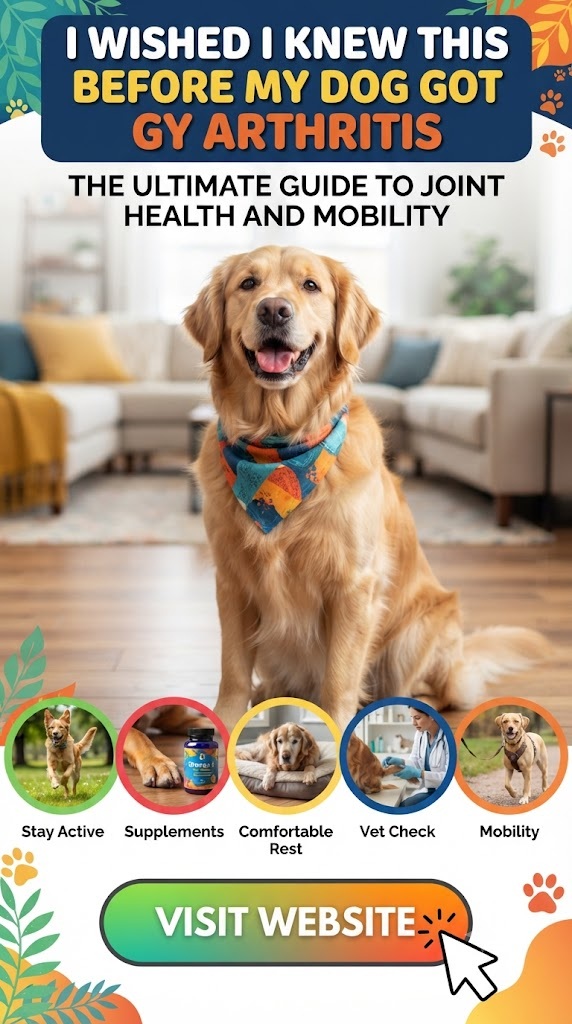
I Wished I Knew This Before My Dog Got Arthritis: The Ultimate Guide to Joint Health and Mobility
It starts subtly. A slight hesitation before jumping into the car. A slower pace on the morning walk. A soft grunt when they finally settle into their bed. As dog owners, we often write these things off as “just getting old.” We convince ourselves that slowing down is a natural part of the canine journey.
But here is the truth I wish I had known years ago: Arthritis is not just “aging.” It is a progressive, painful disease that can be managed, slowed, and even delayed if caught early enough.
If I could go back in time, I would have changed everything from the food I fed my dog to the way we played fetch. This guide is the culmination of everything I learned the hard way. Whether your dog is a bouncy puppy, a middle-aged athlete, or a silver-faced senior, this information is the key to giving them more years of comfort and joy.
Understanding the Enemy: What Is Canine Arthritis?
Most people use the term “arthritis” as a catch-all, but in dogs, we are usually talking about Osteoarthritis (OA) or Degenerative Joint Disease (DJD).
To understand it, imagine your dog’s joints are like high-performance shock absorbers. The ends of the bones are capped with smooth, slippery cartilage, and the entire joint is lubricated by synovial fluid. In a healthy dog, this allows for frictionless movement.
Arthritis occurs when that “shock absorber” breaks down. The cartilage thins, the fluid loses its viscosity, and eventually, bone begins to rub against bone. This creates a vicious cycle of inflammation. The body tries to protect the joint by growing new, jagged bits of bone (bone spurs), which only makes the pain and stiffness worse.
The Myth of the “Yelp”
The biggest mistake I made was waiting for my dog to cry out in pain. Dogs rarely yelp from arthritis. Because it is a chronic, dull ache rather than a sharp, sudden injury, dogs adapt. They are stoic animals that instinctively hide pain to avoid showing vulnerability. If you wait until your dog is vocalizing, the disease is likely already in its advanced stages.
The Red Flags You’re Probably Missing
If I had known what to look for, I would have seen the signs eighteen months before the limp became permanent. Arthritis doesn’t always look like a limp; sometimes, it looks like a “personality change.”
1. The “Think Twice” Moment
Watch your dog at the bottom of the stairs or in front of the sofa. Do they pause? Do they look up, then look away? This hesitation is a sign that they are calculating whether the reward of jumping up is worth the cost of the pain.
2. Excessive Grooming or Licking
Does your dog constantly lick their wrists or hips? This isn’t always allergies. Dogs often lick areas that ache. The act of licking releases endorphins, and the warmth of their breath can provide temporary, localized relief to a throbbing joint.
3. “Grumpiness” or Social Withdrawal
My dog used to love it when the neighbor’s kids came over. Then, he started moving to another room when they arrived. I thought he was just getting “grumpy” in his old age. In reality, he was afraid someone would accidentally bump into his painful hips.
4. Difficulty Rising
Is your dog “stiff” for the first five minutes after waking up? If they look like they are walking on eggshells when they first get out of bed but “warm up” after moving around, that is a classic hallmark of early-stage osteoarthritis.
5. Muscle Atrophy
Look at your dog from above. Are their hips looking narrower while their shoulders look broader? When a dog has back-end pain, they shift their weight forward. Over time, the muscles in the rear legs shrink from disuse, while the front muscles overdevelop to compensate.
The Power of the Plate: Nutrition and Weight Management
If there is one thing I wish I could scream from the rooftops, it’s this: Weight is the single most important factor in managing dog arthritis.
The Heavy Cost of Extra Pounds
Being overweight is a double whammy for an arthritic dog.
- Mechanical Stress: Every extra pound puts exponential pressure on weakened joints. For a 50-pound dog, being just 5 pounds overweight is like a human carrying a 15-pound weighted vest 24/7.
- Inflammatory Fat: We used to think fat was just stored energy. We now know that fat (adipose tissue) is metabolically active. It secretes inflammatory hormones called adipokines into the bloodstream. This means that a fat dog is literally in a constant state of internal inflammation.
The Body Condition Score (BCS)
Don’t rely on the scale alone. Learn the Body Condition Score. You should be able to feel your dog’s ribs easily without pressing through a layer of fat. When viewed from above, they should have a clear waistline (an hourglass shape). If your dog looks like a sausage from above, they are at risk.
Anti-Inflammatory Foods
What you put in the bowl matters. I wish I had moved away from high-carb kibble sooner. Carbs can contribute to inflammation. Instead, look for:
- Omega-3 Fatty Acids: EPA and DHA found in fish oil are scientifically proven to reduce joint inflammation.
- Turmeric (Curcumin): A powerful natural anti-inflammatory (best served as a “Golden Paste” with black pepper and healthy fats for absorption).
- Blueberries and Leafy Greens: Packed with antioxidants to fight oxidative stress in the joints.
Supplements: What Works and What’s Hype?
The world of dog supplements is a multi-billion dollar industry, and not all products are created equal. I wasted a lot of money on “joint chews” that were mostly filler.
The “Big Three”
- Glucosamine and Chondroitin: These are the building blocks of cartilage. While they don’t “cure” arthritis, they help support the structural integrity of the joint and may slow the rate of decay.
- Green-Lipped Mussel (GLM): This is a powerhouse. It contains a unique combination of fatty acids and minerals that are more potent than standard fish oil for joint health.
- MSM (Methylsulfonylmethane): A natural sulfur compound that helps reduce joint pain and swelling.
The New Frontier: CBD and Hemp
Many owners (including myself) have found incredible success with high-quality, full-spectrum CBD oil. It interacts with the endocannabinoid system to modulate pain signals. However, it must be third-party tested to ensure it contains no THC, which is toxic to dogs.
Collagen
Collagen Type II is the primary protein in cartilage. Supplementing with undenatured collagen can help the body stop attacking its own joint tissue, a process called oral tolerance.
Medical Interventions: The Vet’s Toolbox
When supplements aren’t enough, it’s time for “the big guns.” Modern veterinary medicine has made incredible leaps in pain management.
NSAIDs (Non-Steroidal Anti-Inflammatory Drugs)
Drugs like Carprofen (Rimadyl), Meloxicam (Metacam), and Galliprant are the gold standard for managing pain. Never give your dog human Ibuprofen or Tylenol, as these can be fatal. Galliprant is particularly interesting because it targets the specific receptor responsible for arthritis pain while sparing the organs more than traditional NSAIDs.
Monoclonal Antibody Therapy (Librela)
This is a game-changer. Librela is a monthly injection that mimics the body’s natural antibodies to neutralize “Nerve Growth Factor” (NGF), a key driver of arthritis pain. It has fewer side effects than oral medications and can give senior dogs a “second puppyhood.”
Adequan Injections
Adequan is a “Polysulfated Glycosaminoglycan.” Unlike a pill that goes through the digestive system, Adequan is injected into the muscle and goes straight to the joints to help rebuild cartilage and lubricate the joint. It is often described as “WD-40 for dogs.”
Home Modifications: Making Your House a Sanctuary
Your home is currently an obstacle course for an arthritic dog. Small changes can make a massive difference in their daily comfort.
1. Stop the Slip
Hardwood, tile, and laminate floors are the enemies of an arthritic dog. Every time their paws slip, they strain their micro-muscles to stabilize themselves.
- The Fix: Yoga mats, area rugs, or “ToeGrips” (small rubber rings that go over the nails) can provide the traction they desperately need.
2. Elevated Everything
Bending down to eat or drink puts a lot of strain on the neck and front elbows.
- The Fix: Raise their food and water bowls to chest height so they can maintain a neutral spine while eating.
3. The Orthopedic Bed
A $20 poly-fill bed from a big-box store won’t cut it. As the dog sleeps, they sink through the stuffing and end up resting on the hard floor.
- The Fix: Invest in a high-quality, medical-grade memory foam bed. Look for one that doesn’t “bottom out” when you press your hand into it.
4. Ramps over Stairs
Every step up or down a staircase is a high-impact event for a sore hip.
- The Fix: Use portable ramps for the car and permanent ramps for short flights of stairs in the house.
Exercise and Physical Therapy: Motion is Lotion
It’s a common misconception that arthritic dogs should just rest. In fact, “rest is rust.” If a dog stops moving, their muscles atrophy, and the joints become even stiffer. The key is low-impact, consistent movement.
Swimming and Hydrotherapy
Water is the ultimate medium for an arthritic dog. It provides buoyancy (taking the weight off the joints) while providing resistance (building muscle). An underwater treadmill at a canine rehab facility is one of the best investments you can make.
Controlled Leash Walks
Instead of one long 45-minute walk, try three 15-minute walks. Keep the pace steady and avoid “stop-and-start” play like fetch. Fetch is actually terrible for arthritic dogs because of the sudden “planting” of the front legs and the sharp turns.
Nose Work
If your dog can’t run like they used to, engage their brain. Hiding treats around the house or using “snuffle mats” provides mental exhaustion without physical strain.
Alternative and Holistic Therapies
I was skeptical of “alternative” medicine until I saw the results firsthand. Many of these therapies are now backed by significant veterinary research.
Laser Therapy (Photobiomodulation)
Cold laser therapy uses specific wavelengths of light to stimulate cellular repair and increase circulation. It’s painless, takes about 10 minutes, and many dogs find it incredibly relaxing. It’s excellent for reducing localized inflammation.
Acupuncture
Just like in humans, canine acupuncture can help manage pain by stimulating the release of the body’s natural pain-relieving chemicals. Even the most “anxious” dogs often fall asleep during their sessions.
Therapeutic Massage
Learning basic canine massage techniques can help you bond with your dog while flushing out toxins and loosening tight muscles that are overcompensating for joint pain.
The Emotional Toll: Caring for the Caregiver
Living with an arthritic dog is emotionally draining. You worry every time they struggle to stand. You mourn the loss of the dog they “used to be.”
I wish I knew that it’s okay to feel this way. “Caregiver fatigue” is real. The best thing you can do for your dog is to stay positive. Dogs are masters at reading our energy. If you approach them with pity and sadness, they will feel that stress. If you approach their new “slow life” with patience and adaptation, they will remain happy.
Focus on what they can still do. They can still sniff the flowers. They can still enjoy a special treat. They can still lean their head against your knee. The “quality of life” isn’t measured by how fast they can run; it’s measured by the connection they have with you.
Prevention: What I’d Do Differently with a Puppy
If you are reading this and your dog is still young, you have a golden opportunity.
- Slow Growth: For large breed puppies, growing too fast is a recipe for hip dysplasia and future arthritis. Feed a breed-specific puppy food that controls the calcium-to-phosphorus ratio to ensure slow, steady bone development.
- No Jumping: Keep puppies off high surfaces. Don’t let them jump off the bed or out of the SUV until their growth plates have closed (usually around 12-18 months).
- Lean is King: Keep your puppy lean from day one. You should always be able to feel their ribs.
- Early Supplementation: You don’t have to wait for symptoms to start a high-quality Omega-3 or Glucosamine supplement. Think of it as “joint insurance.”
Conclusion: A New Chapter, Not the End
When my dog was first diagnosed with arthritis, I felt like it was the beginning of the end. I wish I had known then that it was simply the start of a new, slower, and more intentional chapter.
By managing their weight, optimizing their environment, utilizing modern medicine, and staying consistent with low-impact exercise, I was able to give my dog three more high-quality years that I didn’t think were possible.
Arthritis is a thief, but it’s a slow one. If you are proactive, observant, and willing to adapt, you can protect your dog’s mobility and keep that tail wagging for a long, long time. Your dog has spent their whole life taking care of your heart; now it’s your turn to take care of their joints.
Key Takeaways for Every Dog Owner:
- Weight is #1: Keep them lean.
- Look for subtle signs: Hesitation is pain.
- Modify the home: Traction is vital.
- Consult your vet early: New treatments like Librela are changing lives.
- Keep moving: Short, frequent, low-impact walks are better than total rest.
Don’t wait for the limp. Start today. Your dog will thank you with every comfortable step they take.