
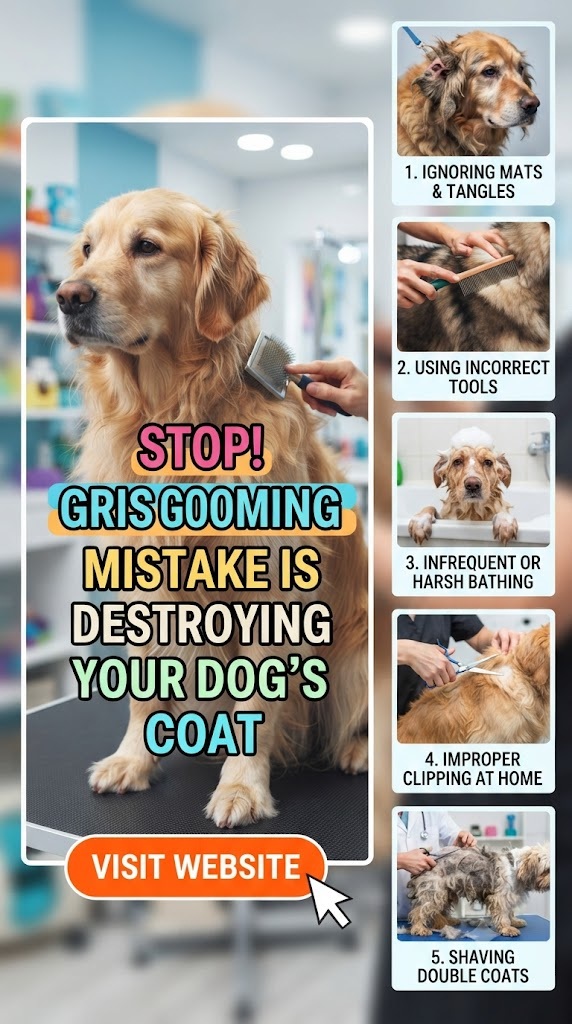
This Common Grooming Habit is RUINING Your Dog’s Coat
Every dog owner wants their furry companion to look their best. We buy the fluffiest towels, the most expensive smelling colognes, and we schedule regular appointments with the groomer. We see a thick, heavy coat in the sweltering heat of July and think, “I should do him a favor and shave that off.” Or, we see a little bit of dirt and think, “A quick scrub with my favorite moisturizing shampoo will fix that.”
But what if I told you that these common, well-intentioned grooming habits are actually the very things destroying your dog’s natural defenses?
There is one specific habit in particular—one that seems logical, helpful, and even kind—that is systematically ruining the coats of millions of dogs worldwide. It leads to skin infections, permanent texture changes, and an inability for your dog to regulate its own body temperature.
That habit? Shaving a double-coated dog.
In this comprehensive guide, we are going to dive deep into why this “common fix” is a biological disaster, along with several other grooming blunders that are stripping your dog of their health and luster.
The Anatomy of a Disaster: Why Shaving is Not a Shortcut
To understand why shaving is so damaging, we first have to understand what a dog’s coat actually does. Most people look at fur as a sweater—something that only provides warmth. However, for a vast majority of breeds (Huskies, Golden Retrievers, German Shepherds, Labradors, and many more), the coat is a sophisticated, dual-layer climate control system.
The Double Coat Explained
A double coat consists of two distinct layers:
- The Undercoat: This is the soft, downy hair closest to the skin. Its job is to trap air and keep the dog warm in winter and cool in summer.
- The Guard Hairs: These are the longer, stiffer hairs that give a dog its color. They protect the skin from UV rays, insects, and moisture.
When you shave a double-coated dog, you are not just “shortening the hair.” You are destroying the structural integrity of this system.
The Thermos Analogy
Think of a double coat like a high-end Thermos. A Thermos keeps coffee hot in the winter and iced tea cold in the summer. It does this through insulation. Shaving a double-coated dog is like taking a hammer to that Thermos. Without the insulation of the undercoat and the protection of the guard hairs, the dog has no way to keep the heat out.
Instead of making them cooler, you are making them more susceptible to heatstroke.
The Irreversible Damage of the “Summer Cut”
Many owners assume that once they shave the dog, the hair will simply grow back exactly as it was. This is a dangerous misconception. In many cases, the coat is never the same again. This condition is often referred to as Post-Clipping Alopecia.
1. The Texture Shift
The undercoat grows much faster than the guard hairs. When a dog is shaved, the undercoat immediately begins to fill back in, but the guard hairs take much longer. Because the undercoat is “velcro-like” in texture, it traps dirt, burrs, and dead skin. This leads to a coat that feels coarse, looks dull, and becomes a magnet for mats.
2. The Color Fade
Because the guard hairs (which hold the pigment) are missing or stunted, the dog’s coat often appears “washed out” or dusty. A vibrant black Lab can end up looking like a dusty gray, and a Golden Retriever can lose that iconic shimmer.
3. The Skin Barrier Breakdown
Without the guard hairs to deflect UV rays, shaved dogs are at a massive risk for sunburn. Furthermore, their skin—which is much thinner than human skin—becomes exposed to environmental allergens and biting insects, leading to “hot spots” and chronic dermatitis.
The “Human Product” Trap: Why Your Shampoo is Poison
While shaving is the most dramatic way to ruin a coat, the most frequent way is through the use of improper bathing products. It is incredibly tempting to use that “extra-gentle” baby shampoo or your high-end salon conditioner on your dog. After all, if it’s good enough for you, it’s good enough for your best friend, right?
Wrong.
The Science of pH Balance
The primary reason human products ruin dog coats lies in the pH level of the skin.
- Human skin is acidic, typically sitting at a pH of around 5.5 to 5.6.
- Dog skin is much more neutral to alkaline, ranging from 6.2 to 7.5.
When you use a human shampoo on a dog, you are essentially applying an acid to an alkaline environment. This disrupts the acid mantle—a thin, protective layer on the skin that wards off bacteria and viruses.
What Happens When the Acid Mantle is Destroyed?
- Dryness and Flaking: The skin loses its ability to retain moisture.
- Increased Shedding: As the skin becomes irritated, hair follicles weaken.
- The “Doggy Smell”: When the acid mantle is stripped, bacteria can proliferate wildly. This causes that sour, yeasty smell that leads owners to wash their dogs even more, creating a vicious cycle of skin destruction.
Over-Bathing: The Death of Natural Oils
Even if you are using the highest-quality canine-specific shampoo, you might still be ruining your dog’s coat by doing it too often.
A dog’s skin produces sebum, a natural oil that coats each hair shaft. Sebum is what gives a healthy coat its shine and its water-repellent properties. It also acts as a natural antimicrobial.
How Often is Too Often?
Unless your dog has a specific medical condition or has just rolled in something unspeakable, most dogs should not be bathed more than once a month. Some breeds with “self-cleaning” coats (like Shibas or Huskies) can go even longer.
When you bathe a dog weekly, you strip away the sebum faster than the body can produce it. The result?
- Brittle hair that breaks easily.
- Itchy, inflamed skin.
- A loss of the coat’s natural ability to shed water and dirt.
The Brushing Blunder: Top-Coat Tending vs. Deep De-shedding
You might think you’re a pro because you brush your dog every night while watching TV. But if you’re using the wrong tool or the wrong technique, you might actually be making things worse.
The Problem with “Surface Brushing”
Many owners use a soft bristle brush or a standard comb that only touches the top layer of the fur. While this makes the dog look neat for ten minutes, it does nothing for the undercoat.
If the dead undercoat isn’t removed, it stays trapped against the skin. This is called impaction. Impacted fur prevents air from reaching the skin, creating a warm, moist environment where yeast and bacteria thrive. This eventually leads to “pelting,” where the fur becomes so matted that it forms a hard shell against the skin, often requiring a total shave-down (which we already know is disastrous).
The “Slicker” Mistake
Slicker brushes are great, but if used with too much pressure, they cause brush burn. These tiny scratches on the skin can become infected and cause the dog to develop a fear of grooming altogether.
The “Rescue Plan”: How to Fix a Ruined Coat
If you’ve realized you’ve been committing one (or all) of these grooming sins, don’t panic. While some damage (like post-clipping alopecia) takes time to heal, most coats can be salvaged with patience and the right approach.
1. Stop the Shaving
If you have a double-coated dog, commit to never shaving them again. If they seem hot, invest in a cooling mat or a high-velocity dryer to blow out the dead undercoat. The “blow out” is the secret to a cool dog. By removing the dead fluff, you allow the “AC system” of the coat to work again.
2. Switch to Soap-Free, pH-Balanced Products
Look for shampoos that specifically state they are pH-balanced for dogs. Avoid dyes, parabens, and heavy fragrances. Ingredients like oatmeal, aloe vera, and honey are excellent for restoring the skin barrier.
3. Mastering the “Line Brushing” Technique
To truly save a coat, you must reach the skin.
- Part the hair with one hand.
- Brush from the skin outward in small sections.
- Use an Undercoat Rake for double-coated breeds and a Slicker Brush for poodles or doodles.
- Finish with a Greyhound Comb (a metal fine-tooth comb) to check for any remaining tangles. If the comb snags, there’s a mat that needs attention.
4. Nutrition: Grooming from the Inside Out
You cannot have a beautiful coat on a malnourished dog. The skin is the body’s largest organ, and it’s the last to receive nutrients. If your dog’s coat is dull, consider adding:
- Omega-3 Fatty Acids: Fish oil is the gold standard for coat shine and skin health.
- Biotin and Zinc: These minerals are essential for hair strength.
- High-Quality Protein: Hair is made of keratin (protein). If the diet is low-quality, the coat will be the first thing to suffer.
Breed-Specific Warnings: Who Is Most at Risk?
Not all coats are created equal. Some breeds are significantly more sensitive to these grooming mistakes than others.
The “Nordic” Breeds (Huskies, Malamutes, Samoyeds)
These dogs have the most complex double coats. Shaving a Husky is almost a guarantee for coat ruin. Their fur is designed to reflect the harsh sun of the tundra just as much as the cold.
The “Golden” Breeds (Goldens, Setters, Spaniels)
These dogs have “feathers.” Owners often shave the belly and legs to prevent burrs. Instead, use a light coat conditioner or “silicone spray” to help burrs slide right out without destroying the fur.
The “Doodle” Dilemma
Poodle mixes are currently the most common victims of grooming ruins. Because they have a mix of hair types (hair that grows continuously like a Poodle and fur that sheds like a Retriever), they are prone to extreme matting. For these dogs, the “common habit” isn’t shaving—it’s neglect. Owners often think they are “non-shedding,” so they don’t brush. This leads to the dog needing to be shaved to the skin due to pain and matting.
Summary: The Path to a Radiant Dog
Your dog’s coat is more than just decoration; it’s a vital organ that protects them from the world. To recap, if you want to stop ruining your dog’s coat today:
- Put the clippers down: Never shave a double coat unless medically necessary.
- Throw away the human shampoo: Buy a high-quality, pH-balanced canine formula.
- Space out the baths: Aim for once every 4–6 weeks.
- Brush to the skin: Don’t just pet the dog with a brush; use line-brushing techniques to clear the undercoat.
- Feed for the coat: Supplement with Omega-3s to provide the building blocks for shine.
By breaking these common but destructive habits, you aren’t just making your dog look better—you’re making them feel better, stay cooler, and live a healthier life. A dog’s coat is their crowning glory; let’s start treating it with the respect it deserves.